Culture & History
Edirne Culture & History
Founded by the Roman emperor Hadrian, the city layered the marks of Byzantine, Ottoman and Republican eras one over another across the centuries. Here you'll find Edirne's cultural strata and turning points.

History of Edirne: Story of a Border City
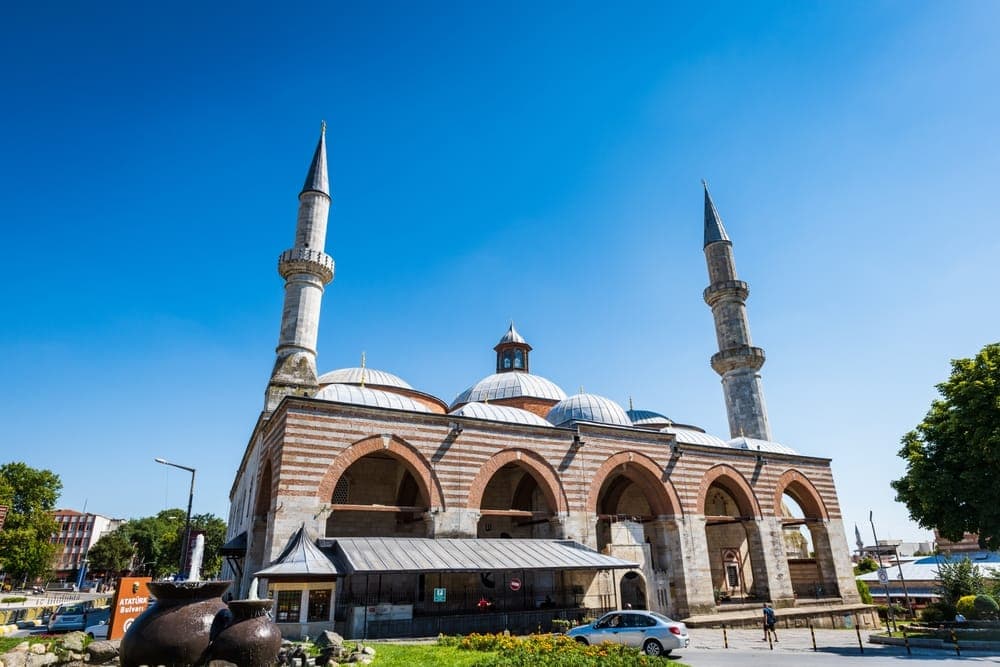
The history of Edirne reaches back to antiquity; the city rose to prominence as Hadrianopolis, named after the Roman Emperor Hadrian. In the Ottoman era it served as the empire's capital roughly between 1363 and 1453 and was adorned with great works. Today it stands out as the cultural and historical capital of Thrace.
→Edirne, Ottoman Capital (1363-1453)
Edirne was the capital of the Ottoman Empire roughly between 1363 and 1453. Until the conquest of Istanbul in 1453 it served as the empire's political, military and cultural center. This era endowed the city with monumental mosques, palaces and bridges.
→
Mimar Sinan and the Selimiye Mosque
The Selimiye Mosque is the masterpiece that chief architect Mimar Sinan described as his crowning achievement, built in 16th-century Edirne for Sultan Selim II. With its vast dome and four slender, soaring minarets, it is considered the summit of Ottoman architecture. The mosque was inscribed on the UNESCO World Heritage List in 2011.
→Edirne's Jewish Heritage and the Great Synagogue
Edirne is a multicultural city that hosted an important Jewish community for centuries. The most magnificent symbol of this heritage is the Great Synagogue, restored and reopened for worship and visits. The city's Jewish past is living proof of Edirne's diversity.
→The Balkan Wars and the Siege of Edirne
Edirne was the scene of a long and grueling siege during the Balkan Wars of 1912-1913. The city was captured by enemy forces in the First Balkan War but was returned to Ottoman rule in the Second Balkan War. This period left deep marks on the city's memory.
→Edirne's UNESCO Heritage
Edirne's UNESCO heritage is represented on two different lists: the Selimiye Mosque and its complex entered the UNESCO World Heritage List in 2011, while Kırkpınar oil wrestling was inscribed on the Intangible Cultural Heritage of Humanity list in 2010. Thus the city is recognized globally for both its monumental architecture and its living tradition.
→