Places to Visit
Places to Visit in Edirne
The Ottoman capital for nearly a century, Edirne today reads like an open-air museum. From the UNESCO-listed Selimiye Mosque to the bridges over the Meriç, we have grouped every sight worth your time by category.
Mosques & Complexes
5 Mosques & Complexes
Selimiye Mosque
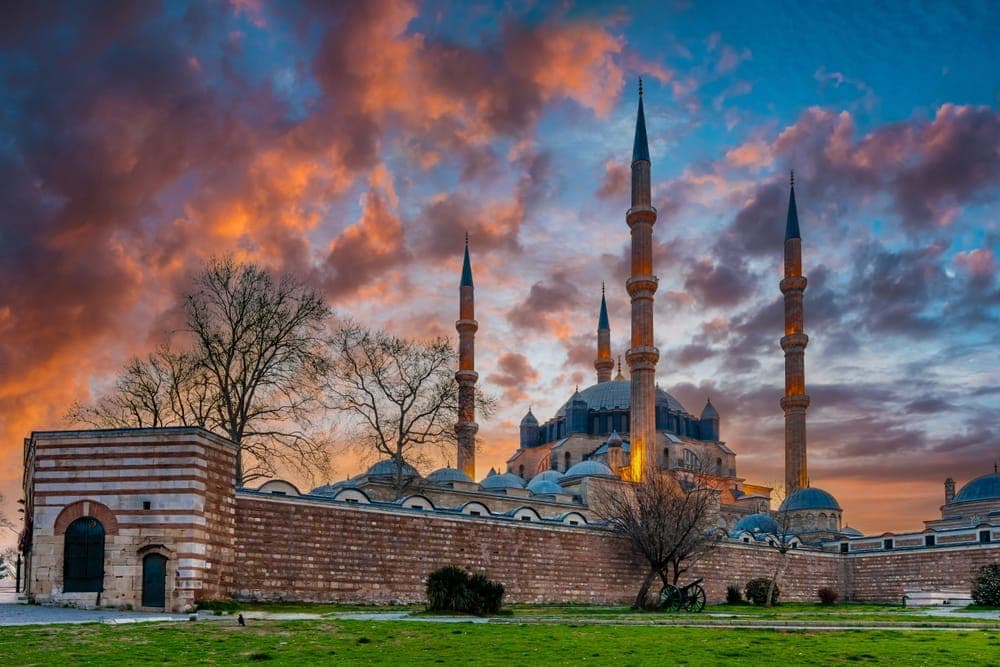
Selimiye Mosque is the building Mimar Sinan raised for Sultan Selim II between 1568 and 1574 and called his own masterpiece. Inscribed on the UNESCO World Heritage List in 2011, its vast dome and four slender minarets mark the summit of Ottoman architecture. It is the first stop for almost everyone who visits Edirne.
→ Mosques & Complexes
Eski Cami (Old Mosque)
Eski Cami is an early Ottoman mosque completed in 1414 and the oldest surviving major mosque in Edirne. It is known for its multi-domed plan and, above all, for the monumental-scale calligraphy that covers its walls. Sitting close to Selimiye, it is easily paired on the same walk.
→ Mosques & Complexes
Üç Şerefeli Mosque
Üç Şerefeli Mosque was built between 1438 and 1447 and takes its name from the tall minaret with three balconies. With a central dome unusually wide for its time, it is seen as an important forerunner of the architectural search that led to Selimiye. Its four minarets, each of a different design, also draw the eye.
→ Mosques & Complexes
Muradiye Mosque
Muradiye Mosque was founded on a hill during the reign of Sultan Murad II and is famed for the early-period tilework in its interior. Set a little outside the city center in a quiet spot, it offers a visit away from the crowds. It is a must for anyone who loves ceramic tiles.
→ Mosques & Complexes
Bayezid II Complex
The Bayezid II Complex is a large Ottoman ensemble founded on the banks of the Tunca River between 1484 and 1488, bringing together a mosque, hospital, soup kitchen and madrasa. Its hospital wing is open today as the Health Museum. It is reached by a short trip from the city center.
→Museums
4Health Museum
The Health Museum occupies the former darüşşifa, the Ottoman hospital, within the Bayezid II Complex, and tells how patients here were treated using music and the sound of water. The museum won the European Museum of the Year Award in 2004. It is one of Edirne's most original stops for anyone curious about Ottoman medicine.
→Edirne Archaeology Museum
The Edirne Museum of Archaeology and Ethnography displays archaeological finds from the prehistory of the Thrace region through to the Ottoman era, alongside a collection of regional ethnography. Its walking-distance location near Selimiye Mosque makes it easy to add to any itinerary. It is a good starting point for those curious about the region's deep past.
→Museum of Turkish and Islamic Arts
The Museum of Turkish and Islamic Arts is housed in the madrasa of the Selimiye Mosque complex and displays Ottoman artworks such as calligraphy, tiles, woodwork and manuscripts. Sitting right beside Selimiye, it is easy to see together with the mosque. It is an ideal stop for anyone interested in Ottoman craftsmanship.
→Lausanne Monument and Museum
The Lausanne Monument and Museum stands in Edirne's Karaağaç quarter and consists of a monument symbolizing the 1923 Treaty of Lausanne together with an associated museum. The monument keeps alive the memory of the treaty that confirmed the international recognition of the Republic of Turkey. It is a meaningful stop to combine with a walk through Karaağaç.
→Bridges
3Meriç Bridge
The Meriç Bridge is a historic Ottoman bridge of many stone arches spanning the Meriç River and linking the city toward Karaağaç. With its long silhouette and river views, it is the best-loved place in Edirne to watch the sunset. It is ideal for evening strolls and photography.
→Tunca Bridge
The Tunca Bridge is a stone-arched Ottoman bridge over the Tunca River that links the city center to the Bayezid II Complex. This riverside crossing is a natural part of visiting the complex and the Health Museum. With its calm river views it makes for a pleasant walk.
→Gazi Mihal Bridge
The Gazi Mihal Bridge is a historic stone-arched crossing over the Tunca River dating to the early Ottoman period. It takes its name from Gazi Mihal, a notable commander of the age, and lies on one of the old roads forming the western entrance to the city. It is a quiet stop for anyone curious about Edirne's bridge heritage.
→Historic Buildings
6Great Synagogue
The Great Synagogue is among the largest synagogues in the Balkans and reflects the heritage of Edirne's long-established Jewish community. After standing closed for many years, it was reopened in 2015 following a thorough restoration. Its grand interior is one of the most striking witnesses to the city's multicultural past.
→Karaağaç
Karaağaç, lying beyond the Meriç River, is Edirne's best-loved nostalgic quarter with its old railway station, cafes and broad green spaces. The Lausanne Monument and the historic station building are here. It is ideal for a slow visit, a coffee break and an evening stroll.
→ Historic Buildings
Ali Paşa Bazaar
The Ali Paşa Bazaar is a long arched historic covered market built by Mimar Sinan in the 1560s. Along its single corridor running end to end, you will find Edirne's famous fruit-scented soaps, almond paste and souvenirs. It is an enjoyable stop for both shopping and architecture.
→Historic BuildingsSelimiye Arasta
The Selimiye Arasta is a historic market built as part of the Selimiye Mosque complex, its two sides lined with small shops. Sitting right beside the mosque, it is easy to drop into during a visit and ideal for souvenir shopping. Its arched gallery lends a historic frame to the browsing.
→Sarayiçi and Edirne Palace
Sarayiçi is a historic ground on the bank of the Tunca River that holds the remains of the Ottoman Edirne Palace and hosts the traditional Kırkpınar oil-wrestling festival each year. Once the site of a magnificent palace complex, the area is today an open field of history and events. It is a meaningful stop for anyone curious about the wrestling tradition.
→Macedonian Tower
The Macedonian Tower is a surviving tower from Edirne's ancient defensive wall system, standing in the city center. It is one of the few remains that shed light on the city's deep past reaching back to the Roman age. Together with the nearby archaeological area, it offers a short historical stop.
→