Quick answer
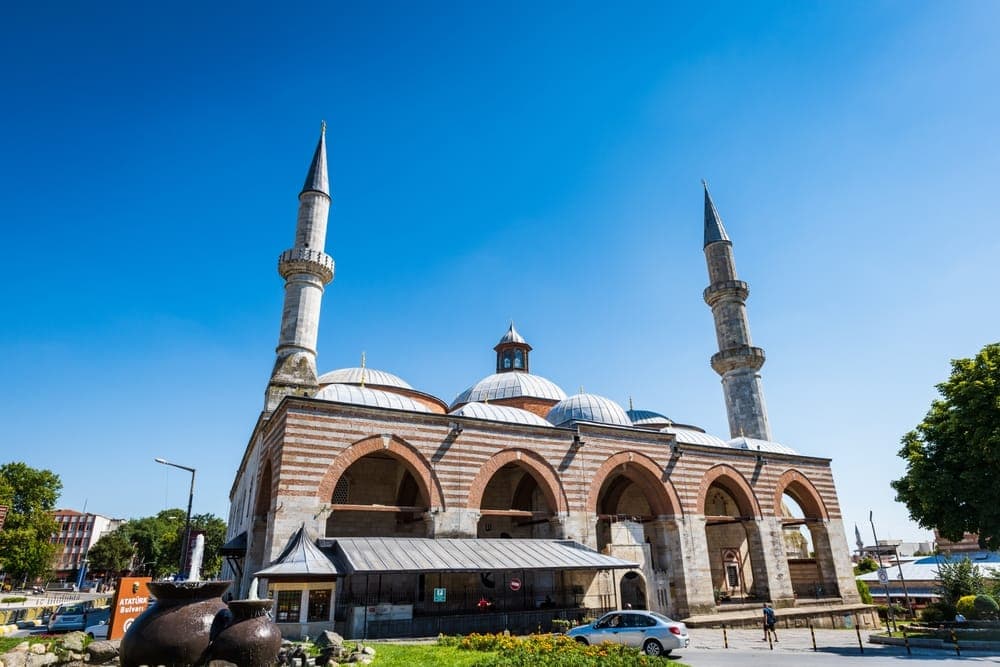
Eski Cami is an early Ottoman mosque completed in 1414 and the oldest surviving major mosque in Edirne. It is known for its multi-domed plan and, above all, for the monumental-scale calligraphy that covers its walls. Sitting close to Selimiye, it is easily paired on the same walk.
A trace of early Ottoman architecture
Completed in 1414, Eski Cami dates from the period when the Ottomans made Edirne their capital. Unlike Selimiye's single great dome, it has a nine-domed, multi-unit plan that reflects the architecture just before the classical age.
Resting on thick stone piers, the domes give the interior a calm and solemn feel. The building is an important stage on the road toward the airy single-space mosques of the later period.
Giant calligraphy across the walls
What makes Eski Cami unique is the monumental calligraphy worked onto its walls and piers. Legible even from a distance, these giant letters vividly show how the art of Islamic script could serve as architectural decoration.
When you step inside, remember to look up at the large compositions on the piers; this calligraphy is among the most photographed details of the mosque.
Frequently Asked Questions
When was Eski Cami built?+
The mosque was completed in 1414 and is the oldest surviving major mosque in Edirne.
Why is Eski Cami famous?+
It is known for its multi-domed early Ottoman plan and the monumental calligraphy covering its walls.
Updated: June 2026


